A Summer Blanket
I think it’s safe to say that my grandmother Sibyl, like so many of her generation was raised to value frugality. My impression is that for much of her life she lived rather simply and made do with what she had. Being the mother of ten kids, I’m sure there were plenty of times when she used her creativity to stretch their household means. Even later in life, when she and my grandfather could afford to live in big houses and drive Cadillacs, she maintained certain frugal tendencies. One in particular, her proclivity for using scrap fabric to make blankets (not quilts), continues to inspire my own creative pursuits.
The last time I was able to visit her (an embarrassingly long time ago now) I had recently finished a quilting class and made my first small quilt. I was excited to connect with her about the experience and ask her questions about her methods. I was somewhat surprised when her response was, “Well I don’t make quilts. I make blankets.” She grew up on the prairie and when they needed a blanket they made one with whatever scraps they could get their hands on. Nothing fancy, just useful. And that’s what she continued to do until her failing eyesight forced her to quit.
That interaction stuck with me. I had always thought of her as a quilter, and yet she refused that designation. Her adamance made me reconsider what I had hoped to learn from that class, what I had hoped to learn from her. By underscoring the usefulness and frugality of her blankets it was almost as if she had said “quilting is frivolous, ostentatious, wasteful”. Of course, she didn’t say any of those things, but it got me thinking about the distinction she was making between quilts and blankets.
Technically, my grandmother’s blankets are quilts. They are pieced, involve three layers, sewn together, sometimes even with a stitched pattern. I think what makes them unique among “quilts” is the almost exclusive use of scrap fabric. Obviously there are scrap quilts everywhere, it’s what quilting was all about originally. I don’t mean to say she invented the concept by any means. But I think she wanted to set herself apart from a certain type of sewist who spends lots of money on fabric and lots of time designing and executing meticulously crafted quilts. She wasn’t making quilts to be admired; she was making blankets to keep people warm.
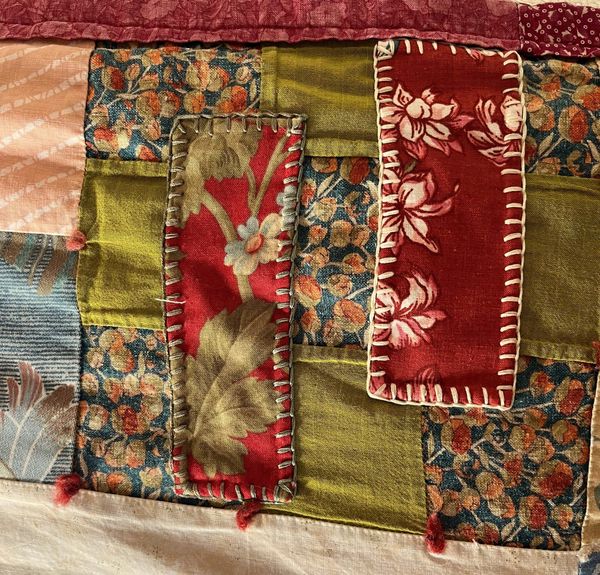
I own several of them, and although some have a color scheme of sorts, most are rather random. There’s always a piece or two that stand out, that don’t match the rest. I know a lot of the material she used was leftovers from my aunts’ projects, and I have loved hearing from them about fabrics they recognize when I have posted about my repairs.
I don’t wholly adhere to my grandmother’s philosophy about the differences between quilts and blankets; I greatly admire quilting as an art form and am in awe of the skills that dedicated quilters possess. I’m not here to shame anyone for spending money on new fabric to make such a work of art. But I have realized that what I had been wanting to do, the reason I took the quilting class, was to learn how to put pieces of fabric together to make a blanket. An artful blanket. I didn’t really care about the different pieced patterns I could make. I just wanted to combine fabrics I like and put them on my bed.
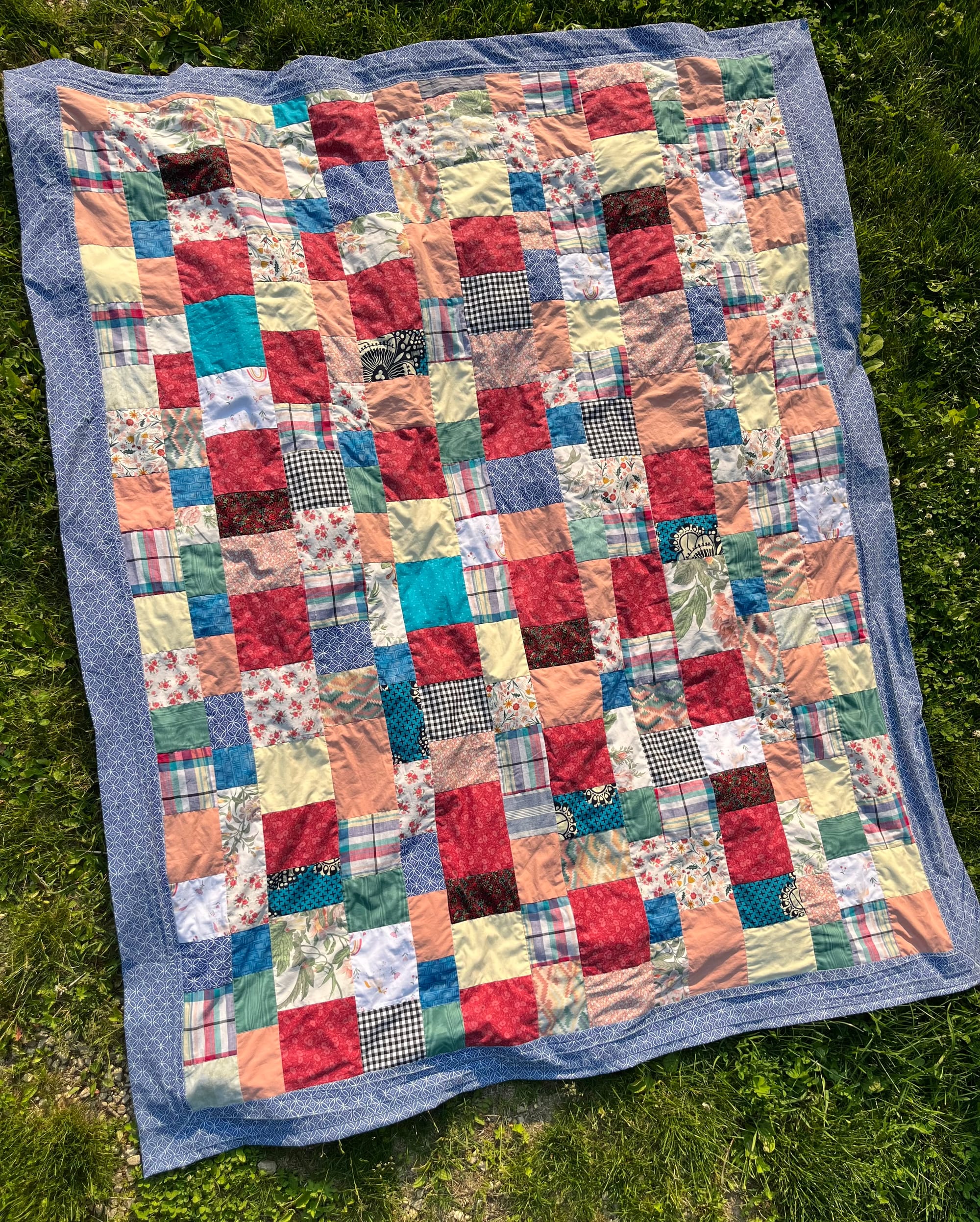
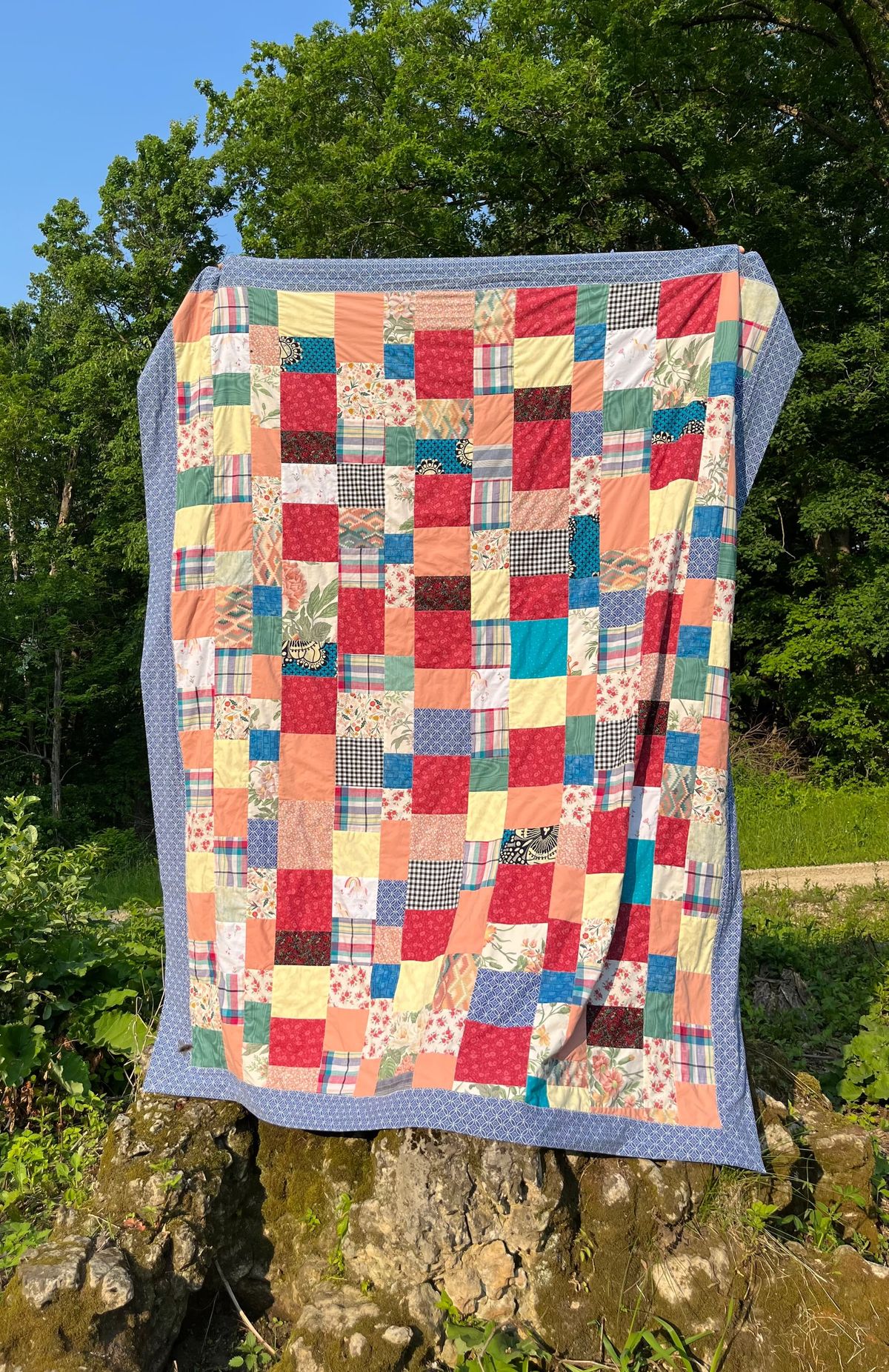
I’d say that where I differ from my grandmother is that I like to be very intentional about my choice of fabric, from within my scrap collection. I like to start with a single fabric that contains the whole color palette of the quilt (the plaid in this case) and then pull out whatever other scraps fit into that. And true to my grandmother’s frugal legacy, every quilt I’ve made (I think this is my fifth) has been an authentic scrap quilt.
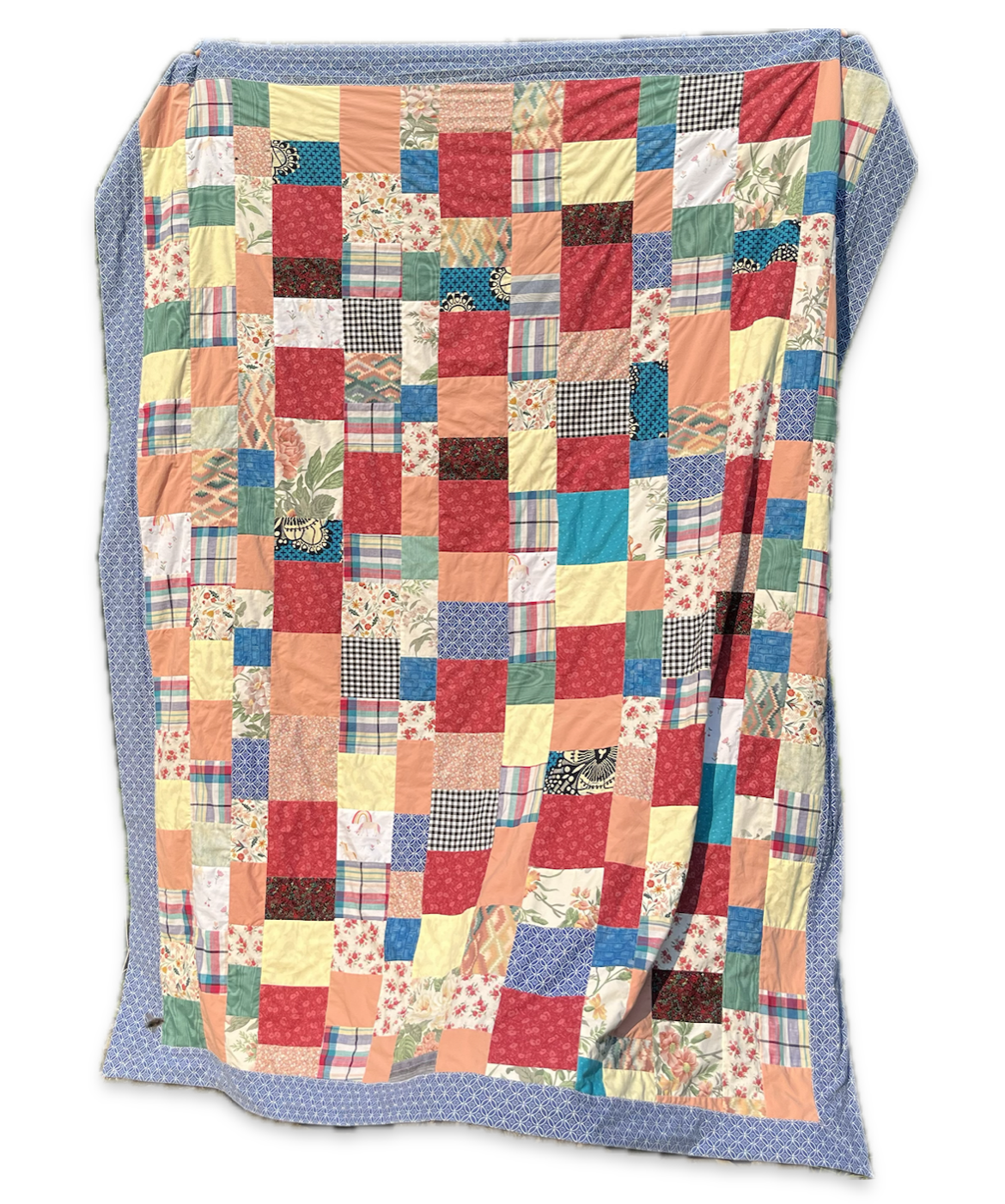
Every single piece of this quilt is repurposed or thrifted. The backing and binding is the flat sheet from a set that I bought over a decade ago, of which the fitted sheet was repaired multiple times before joining the scrap collection. There are pieces that match my daughter’s two sheet sets, cut from the bags that the sets come in. The red pieces are from the same thrifted fabric that I used for the backing of my own quilt. There are also pieces of fabric leftover from a dress my mom made for me in high school (don’t worry Mom, I held onto a piece for myself too). Most of the rest are pieces I have had in my collection for years and years.
I am very happy with how this one came out, and am especially pleased with how quickly I got it done (less than a month!). It helps that I’ve got something of a method now. Let me know if you want more details about it in a future post. For now, I’ll leave it there. Thanks for reading!